Reading Truck Tire Experts
Before buying lift kits and truck accessories in Reading, choose between a leveling kit and a complete suspension lift. A leveling upgrade corrects factory rake while preserving daily performance, and a suspension lift adds clearance, wheel travel, and bigger tire options. Collect precise year, trim, drivetrain, and suspension specs to confirm Rough Country fit. Plan for tires, alignment, and add-ons like steps, lights, or liners—you'll understand how the ideal setup comes together.
Key Takeaways
- Select a leveling kit to remove factory rake while maintaining near-stock handling and fitting bigger tires for daily driving.
- Go with a suspension lift for better ground clearance, wheel travel, and off-road performance, recognizing handling and steering may shift.
- Verify exact fitment using your truck's year, model, make, drivetrain, trim, cab, bed, and suspension configuration before ordering Rough Country parts.
- Align lift height and shock choice with your use, addressing commuting, trail use, towing, or intensive off-road driving.
- Plan your budget for beyond the kit price, accounting for alignment, labor, wheels, tires, shocks, and additional accessories like steps, lights, and liners.
Suspension Lift Kits Against Leveling Kits
Since both improvements affect your truck's stance, leveling kits and suspension lift kits address distinct problems and offer varied outcomes. A leveling upgrade usually raises the front to correspond with the rear, addressing factory rake with minimal change to geometry, ride height, and daily drivability. You use one when you want a cleaner profile and space for bigger tires.
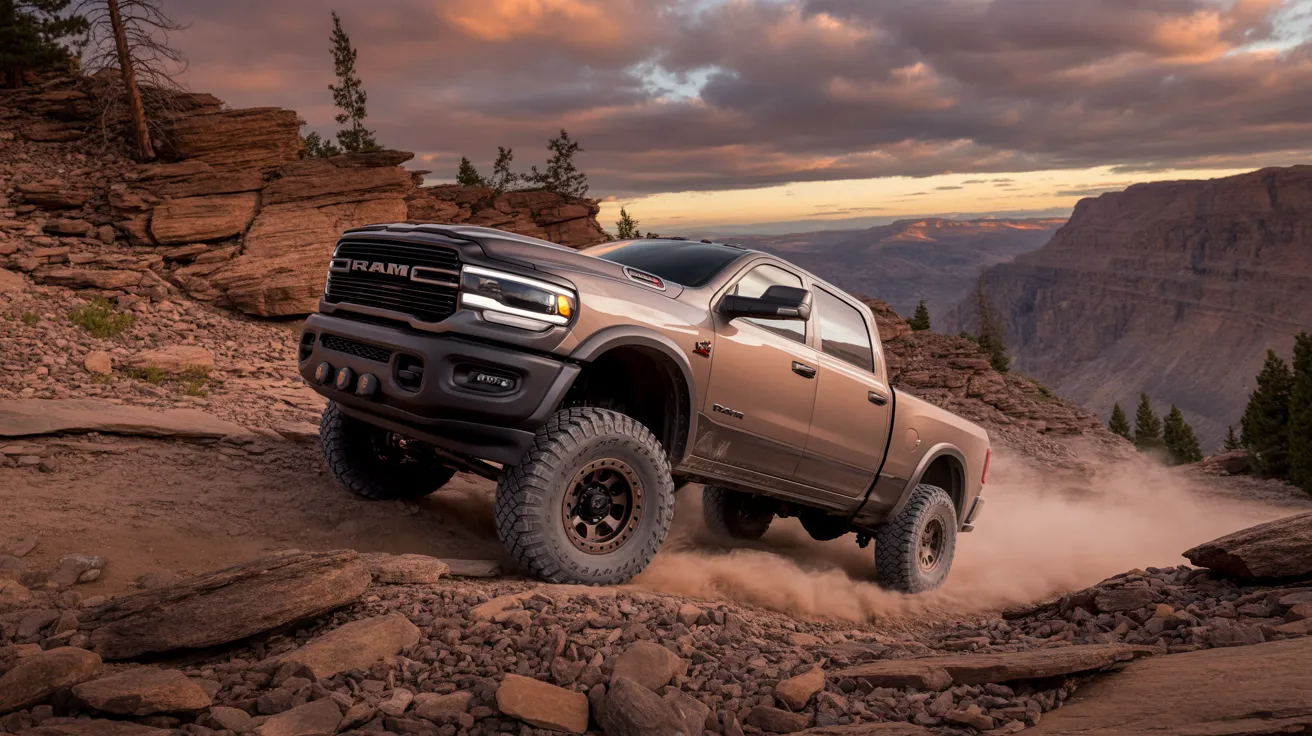
A suspension lift kit lifts the entire truck and revises important parts to enable more ground clearance and suspension travel. You'll experience larger improvements in ride height, off-road capability, and tire fitment, but you should prepare for handling tradeoffs, steering changes, and a higher center of gravity. When you prefer subtle visual improvement, level it. When you require true clearance and articulation, lift it and structure the supporting modifications according to your driving needs.
Which Rough Country lift kit works with your truck?
Start by gathering your truck's year, brand, and model, drivetrain, and how you plan to use it, since Rough Country engineers lift kits based on exact structural design and capability targets. This foundation determines which suspension parts, brackets, and fasteners will fit without fitment or alignment problems.
Start by verifying OEM ride height, cab layout and cargo bed configuration, axle setup, and whether your truck has 2WD, 4WD, or adaptive suspension. Rough Country fitment guides make this easy, but you must verify trim compatibility against trim-level parts and OEM package variations. A kit that fits a Silverado 1500 won't fit a Trail Boss, and a Ram with air suspension needs different accommodations compared to a truck with coil springs. By confirming exact fitment upfront, you sidestep fitment surprises, hardware conflicts, and reshipment corresponding information delays.
Which Rough Country lift kit suits your driving habits?
Select the kit with your driving style, and you'll achieve better ride quality, reliability, and tire space without spending on unused features. If your truck spends most days commuting, pick a simple Rough Country leveling kit or a 2- to 3.5-inch suspension setup designed for commuting comfort and predictable steering geometry.
When you alternate between pavement and trails, go with a lifted suspension featuring improved shocks and corrected arm angles. You'll achieve stronger off road handling, improved articulation, and room for larger tires without overstressing OEM components. For heavier trail use, prioritize lifted shock struts, Rough Country N3 or Vertex dampers, and kits that maintain driveline angles under compression. A quality Rough Country package needs to match cargo load, speed, and terrain, and how firm a ride you can accept.
Premium Rough Country Truck Accessories
Complete your suspension upgrade including Rough Country accessories that tackle the real weak points you'll notice after changing ride height, tire size, and vehicle stance. Begin with upgraded entry steps or rock guards, which restore vehicle access and deliver side protection as your truck sits higher and wider.
Next, address visibility and control. Rough Country LED lightbars expand visibility range on dark terrain, job sites, and rural roads without complex setup. Cabin protection and cargo liners safeguard the cabin from mud, gravel, and water you'll drag in after trail use. Wheel flares reduce tire throw and match the wider profile provided by larger rubber. For towing and recovery work, commercial-grade hitches, towing accessories, and bumpers that support winches provide functionality without affecting fit. Pick items that match your truck's modified geometry and usage demands.
How Much Should You Budget for Your Build?
Once you've selected the suspension kit and supporting accessories, establish a budget that exceeds the advertised kit price. You'll require funds for shocks, rims, tires, alignment, installation costs, and any drivetrain or steering adjustments your platform needs. Manufacturer standing is crucial here; top-tier kits typically deliver tighter tolerances, superior ride comfort, and fewer install headaches.
For realistic budget ranges, expect entry-level spacer or leveling setups to start lower, while complete suspension setups featuring control arms, tuned shocks, and oversized tires escalate rapidly. Installation complexity, labor charges, and alignment calibration can add significantly. You should also price additional upgrades such as gear modifications, brake parts, and recovery equipment if you're building for trail use. If cash flow matters, compare payment plans carefully and focus on reliability over showy accessories.
Frequently Asked Questions
How Do Lift Kits Influence Warranty Coverage?
Yes, lift systems could impact your manufacturer warranty, but they don't automatically void it. You may face warranty problems if the dealer establishes your lift modification caused or helped cause a breakdown. Powertrain, steering, suspension, and drivetrain claims often trigger dealer disagreements. You must maintain installation documents, use quality components, and keep service intervals. That helps you dispute declined claims and protect coverage if the modification wasn't responsible.
Do Bigger Tires Mean Re-Gearing?
Yes—if you move up several tire sizes, you'll usually need gear ratio changes. As an example, if you switch from 31-inch to 35-inch tires, your vehicle can feel slow, shift erratically, and create drivetrain strain under load. Changing gears brings back proper gear ratios, allowing you to regain acceleration, towing performance, and transmission behavior. You might not need gearing for a minor upsizing, but if power, fuel economy, or shift quality drop, it's usually the right call.
How Frequently Should You Inspect Lift Parts?
You must examine lift kit components once 500 miles are reached, then per oil change or every 3,000 to 5,000 miles, subject to use. Routine inspections assist you in catch bushing wear, leaking shocks, bracket issues, and alignment problems early. Check Fastener torque after hard off-road runs, towing, or impacts. If you drive in mud, salt, or rough terrain often, shorten intervals and look at suspension and steering components more frequently.
How does a suspension kit affect your truck's towing and payload capacity?
Yes, a lift kit can alter your towing and payload capacity. When you raise ride height for additional dirt clearance, you change suspension geometry, center of gravity, and force distribution on parts. That can reduce stability when loaded and add drivetrain strain, especially with larger tires. You should stick with your manufacturer's ratings unless an quality-engineered kit explicitly states new ratings. Correct alignment, transmission ratios, and brake performance matter too.
Are Alignment Services Needed After Installing Truck Accessories?
Yes—if accessories alter ride height, suspension design, steering alignment, or tire size, you require an wheel alignment. You'll feel the theory quickly: minor adjustments can cause your truck to pull to one side, scrub tread, and compromise handling. A proper wheel alignment restores camber, caster, and toe angle to specification. After certain installs, you may also need brake system calibration for driver-assist accuracy. You preserve tire longevity, steering accuracy, and real-world safety by verifying alignment right away.
Conclusion
Selecting the right suspension setup and accessories depends on your driving style, what stance you want, and your financial constraints. When you match a Rough Country suspension with your driving style, you'll get capability, height, and appearance that work together like a well-tuned drivetrain. Include thoughtful upgrades, plan your spend carefully, and you'll build a truck which is dependable for daily driving, capable off it, and prepared for any task ahead.